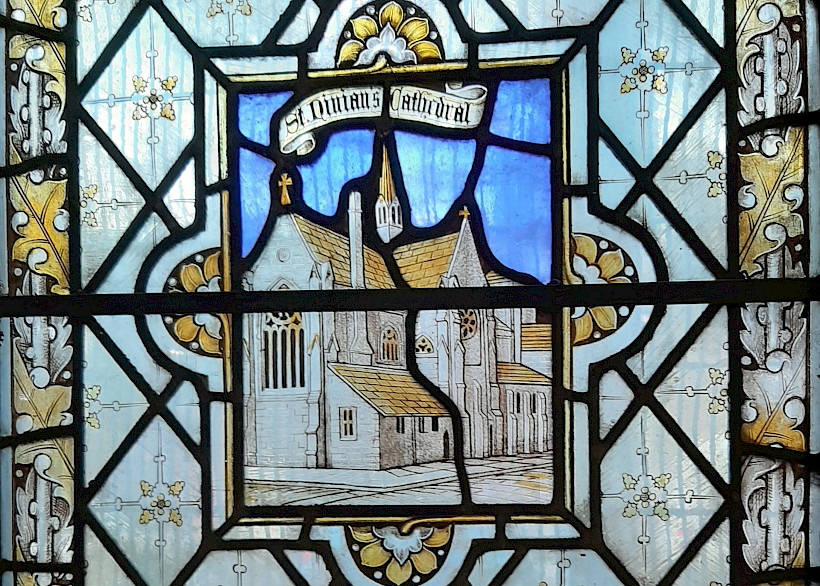
Perth Cathedral, St Ninian’s was the first to be built in Britain after the Reformation and was consecrated in 1850. It stands on ground that originally formed part of the Blackfriars Monastery and is dedicated to St. Ninian of Whithorn, one of the greatest of the early Scottish Saints.
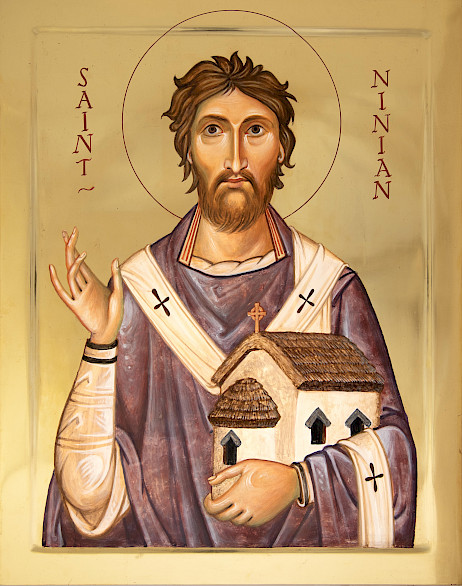
The roots of our congregation go back to the first Christians in Perth. This was the land of the Southern Picts and it was said to have been evangelised by St Ninian of Whithorn who was gives as our Holy Patron when St Ninian's Cathedral was built in 1850. In 2026 we set up a shirine to St Ninian around a new icon of the saint painted by Aidan Hart and given by the family of Canon Celia Matthews. It is a centre for prayer and devotion, calling us back to the rock from which we were hewn.
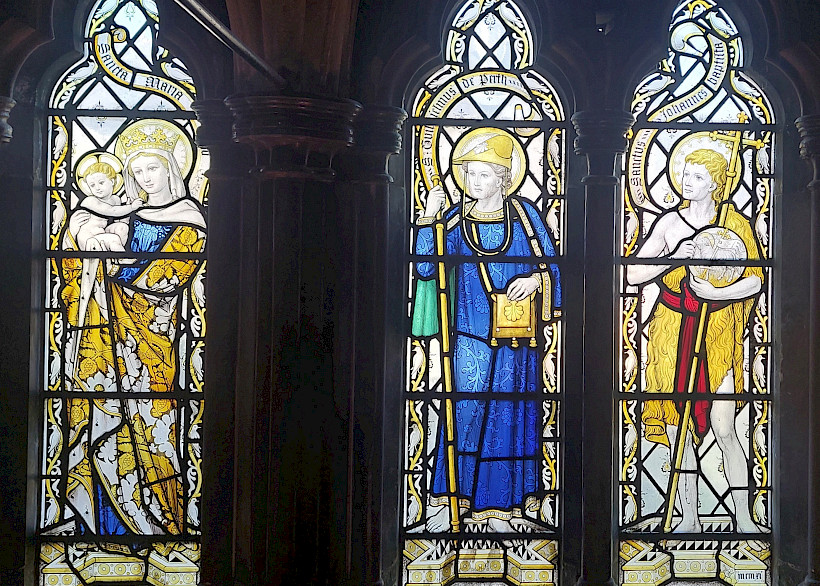
Perth in the middle ages was a great centre of Christian spirituality and culture, surrounded as it was by a ring of monasteries. In this age of faith, Perth produced at least one saint, St William of Perth. He was a devour baker in the city who gave freely to the poor, attended Mass frequently, and adopted a local orphan boy. They went on pilgrimage to the Holy Land but, on the road to Canterbury, William was murdered by his adopted son outside Rochester. There were miracles at his corpse, a mad woman was cured, and the Benedictine monks of Rochester built a shrine for his body in their Cathedral which was a famous goal for pilgrims. In recent years St Ninian's Cathedral and Rochester Cathedral have come together to promote devotion to St William.
A hint of the beauty of the Christian life in medieval Perth can be found in the music of Robert Carver, Canon of Scone. Division and destruction were brought to Perth by John Knox and his followers in May 1559, when they wrecked the churches and drove out the monks and nuns. Among the remaining Christians in the city divisions persisted and these were finally institutionalised in 1689 when the state church became Presbyterian (a church run by committees and Calvinist in its theology). Not all accepted these novelties and the majority of Christians in Perth remained loyal to the Scottish Bishops and a broader, more ancient theology. These were known as Episcopalians (from the Latin word for bishop, 'episcopus') but their wishes were ignored by the new regime and in 1691 a Presbyterian Minister was planted in St John's Kirk, the historic Church of Perth. Devout Episcopalians continued to worship together outside St John's but they were persecuted.
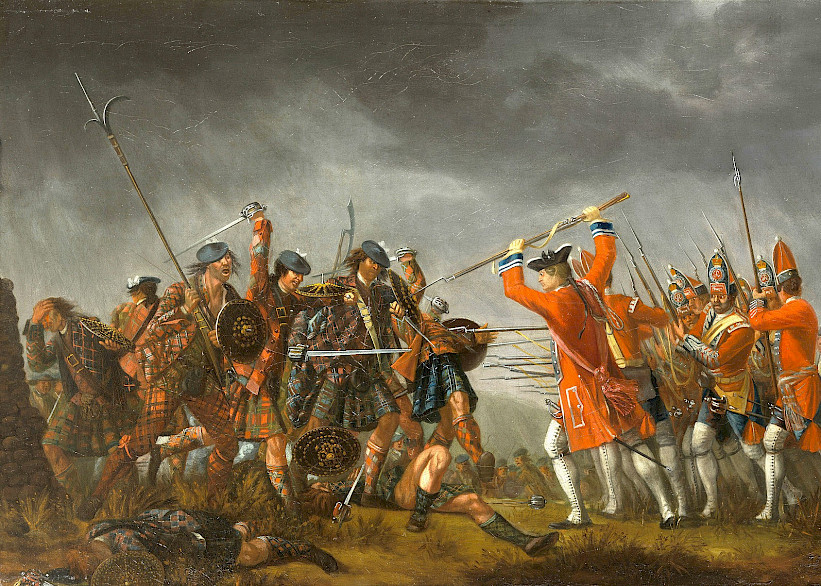
In the eighteenth century many Perth Episcopalians were loyal to the Jacobite cause. This aimed to restore to the throne King James VII (James is 'Jacobus' in Latin) and his descendants who had been excluded by the political revolution of 1688. In 1745 during the Jacobite rebellion, one of the Perth priests, Robert Lyon, followed Bonnie Prince Charlie as a chaplain to his army and was captured after the defeat of the Jacobites at the Battle of Culloden. He refused to recant his faith or his loyalty to the true King and so was executed as a martyr at Penrith on 28th October 1746. Before the '45, the Perth Episcopalian congregation had divided. In 1740 some members repudiated the Scottish Bishops and in 1750 set up a 'qualified congregation' which survived until 1849 when it returned to the Scottish Episcopal Church. It still exists as our sister congregation at St John's Episcopal Church. Other Episcopalians in Perth continued to worship in communion with the Bishops but they joined with the qualified congregation in 1807 and the united congregation again left the Church in 1810.
In 1846 an Episcopalian mission was again established in Perth by Bishop Torry and it was joined by a faithful remnant from the Qualified Chapel, including people from the old congregation which had ended in 1810. This mission was led by the Revd John Chambers who had been inspired by the great Anglican Catholic revival called the 'Oxford Movement'. From the first, Chambers worked among the poor of the city, celebrated dignified worship, taught the Catholic faith as received by the Scottish Episcopal Church, and reconciled many people to the old Church. One evening, Chambers visted a poor family in his congregation to share some exciting news, 'we're going to have a great Cathedral in Perth!'
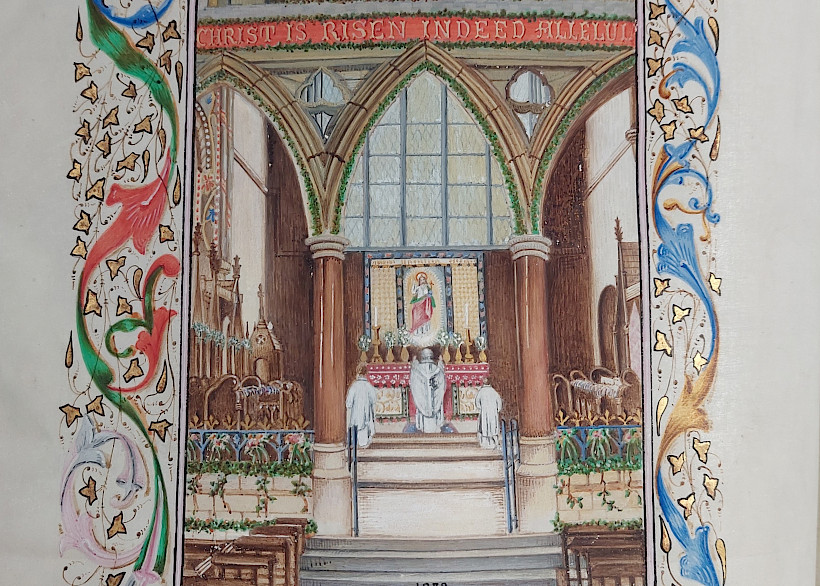
The inspiration to build a Cathedral in Perth came to two young Scottish students at Oxford in 1847. They were Horace Forbes (1829 – 1914), later the 19th Lord Forbes, and George Frederick Boyle (1825-1890), later the 6th Earl of Glasgow, and they were fired up with Christian zeal for the restoration of the ancient Catholic faith in their own Scottish Episcopal Church. They wanted the Cathedral to be a centre for mission and to be dedicated to the revival of authentic Christian worship and culture, the service of the poor and the work of Christian education. The grand plans of students often come to nothing, but these students had wealth as well as vision and St Ninian's Cathedral today is the result of this undergraduate inspiration.
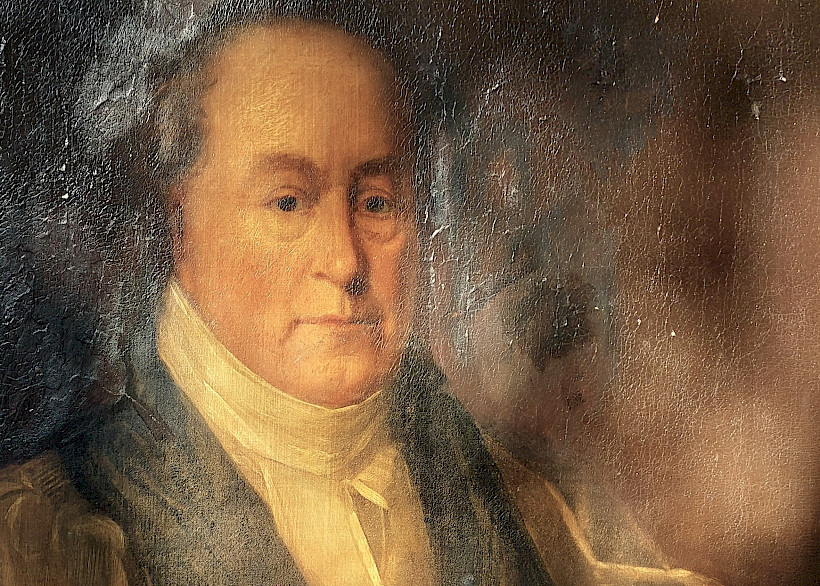
Forbes and Boyle shared their plans with the 84 year old Patrick Torry, Bishop of St Andrews, Dunkeld and Dunblane and he welcomed them with enthusiasm. Torry was a link with the old, persecuted Jacobite Episcopalianism of the eighteenth century so St Ninian's Cathedral is the result of the union of this ancient Scottish tradition with the new fire for the gospel from Oxford.
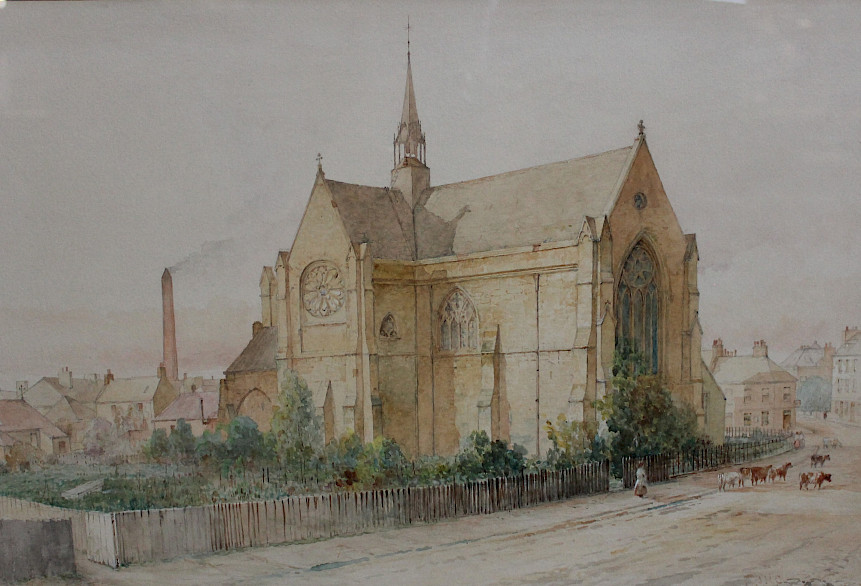
Our Cathedral building was begun in 1849 and designed by the famous gothic revival architect William Butterfield. The chancel and transepts, with one bay of the nave, were built first, as shown in the painting above, and it was consecrated by the saintly Bishop Forbes in 1850. It is 'A listed' which means it is of national or international importance. The Lady Chapel was built later and paid for by Mr MacGregor, immortalised by Beatrix Potter in her Peter Rabbit stories. The Lady Chapel and Chapter House were designed by John L Pearson and carried out by his son, Frank Pearson.
To be continued.........
For information on the history of the Scottish Episcopal church, please visit our short introduction or the Scottish Episcopal Church website.
For further reading on the history of the Cathedral, consult:
GTS Farquhar, A Short History of St Ninian's Cathedral (Edinburgh, 1927).
GTS Farquhar, Episcopal History of Perth (Perth, 1894).
Marion Lochhead, Episcopal Scotland in the Nineteenth Century (London, 1966), chapter 4, 'The Church in Perth: Patrick Torry'.
Rowan Strong, Episcopalianism in Nineteenth-Century Scotland (Oxford, 2002), chapter 5 'Partisan Episcopalianism: Evangelicals and Anglo-Catholics'.
Mary Verschuur, Politics or Religion: The Reformation in Perth 1540-1570 (Edinburgh, 2006).